

How Do I Get Papers On Cats That's Never Been Registered
Disclosure: We may get commissions for purchases made through links in this mail.
Because breeding your cat or cats? Or perhaps y'all're just wondering what it might take to become a true cat breeder? Either fashion, this guide is for you lot.
Breeding pedigreed cats is a challenging project, not to exist entered into without plenty training and knowledge. We want to show you just how complicated ethical cat breeding is.
At TheCatSite.com, we passionately back up the spaying and neutering of cats. The only exception would be convenance by an experienced, ethical breeder. Attempting to mate cats of the aforementioned brood without knowing what you lot're doing could result in suffering and fifty-fifty expiry for the mother cats and the kittens.
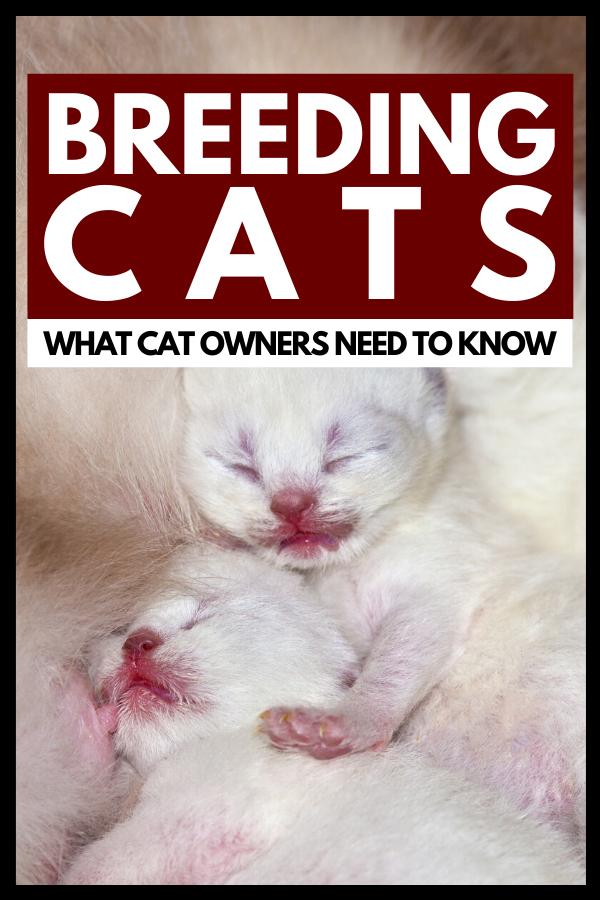
Throughout most of the history of the domesticated cat, there has been little or no deliberate breeding of cats for type.
The various cat breeds of today accept generally evolved naturally in different geographic niches.
The names of the different breeds, such as Persian, Siamese, Balinese, Abyssinian, and Somali, indicate their real or assumed geographic origins.
The great cat exhibition held in Great Uk in 1871 marks the beginning of the era of international cat breeding. The exhibition, which led to the awakening of interest in the field, displayed mainly Persian and shorthaired cats.
Types of Cat Breeds
Cat breeds are generally divided into two major categories - longhaired and shorthaired cats. In each of these categories, in that location is a variety of specific breeds.
True cat associations in Europe and the United States officially set the standards for each brood. These standards change from time to time, according to the current trends in the field, and the names used to indicate specific breeds are different in the United states and Europe. As well, some breeds are recognized as separate breeds in the United States, merely not in Europe, and vice versa.
What is ethical breeding?
The ethical breeding of cats in catteries is a circuitous business organization. Y'all may recall that information technology is enough to buy any two purebred cats and beginning convenance them. It requires a skilful understanding of the genetics governing each breed and detailed knowledge of the breeding history of the specific breeding pair.
Well-nigh pedigree cats are unsuitable for further breeding. These are called "pet quality" and are ordinarily neutered and sold as pets to not-breeders.
But a few of the kittens born to a pair of full-blooded cats of the same breed have the correct genetic qualities to exist used as breeding cats. These are called "show quality" and are relatively rare and expensive. Information technology is particularly of import to know the diseases and genetic flaws typical of each brood, in order non to brood cats that have these flaws.
What Are True cat Registries?
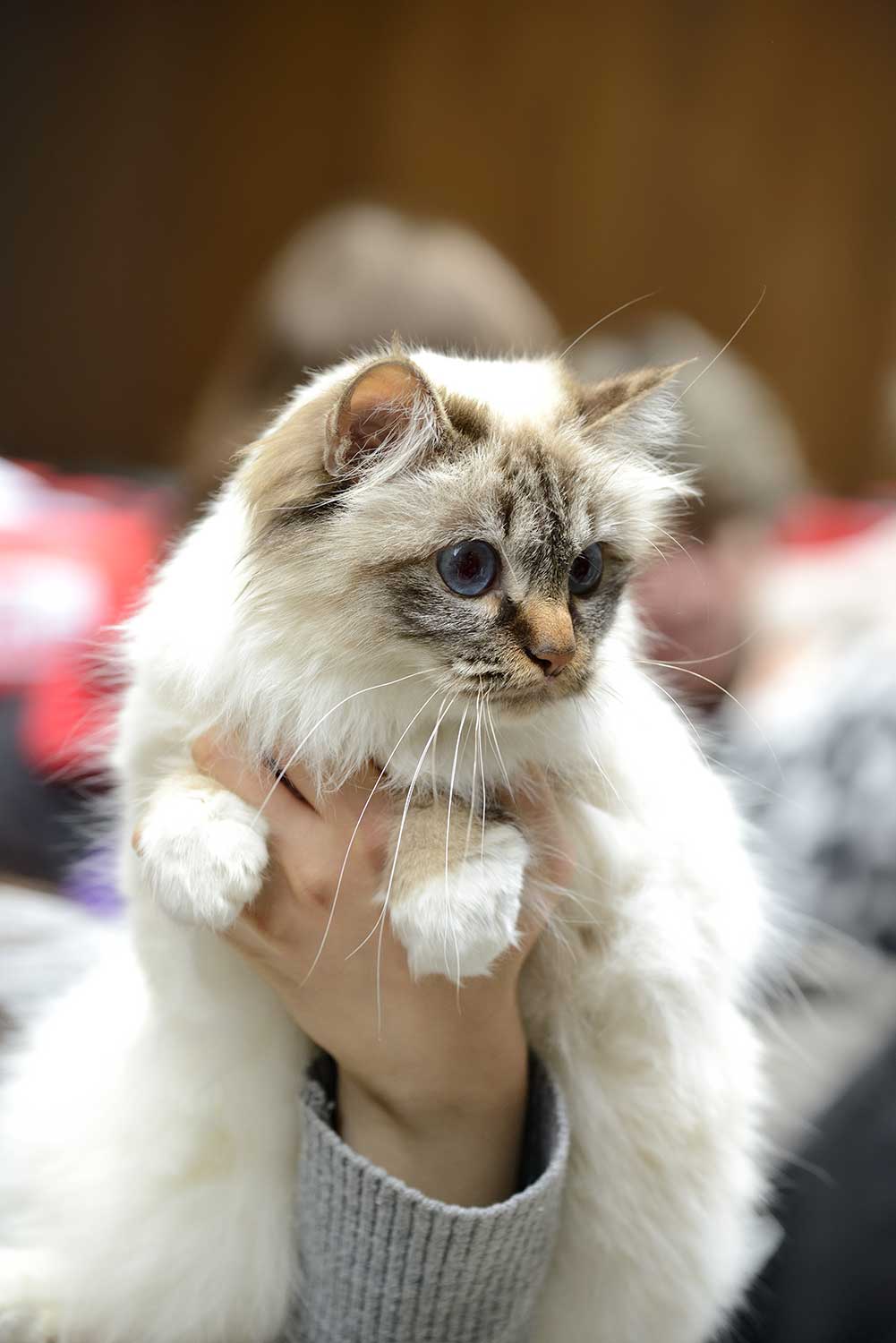
True cat registries are the organizations in charge of keeping records of the genealogies of purebred cats.
They're the ones that consequence formal certificates attesting to a cat'south breed and documenting its lineage. These are known as pedigrees.
True cat registries hold cat shows, where registered cats are judged co-ordinate to specific breed standards.
Titles earned during these shows are then recorded in the cat'south papers and can exist used to assess a true cat'south potential in a convenance plan.
Some registries take introduced genetic testing allowing for an even more authentic evaluation of a true cat's potential function in the hereafter evolution of the brood.
Cat registries aim at promoting the ethical and professional breeding of cats.
Essentially, they all support educating true cat owners virtually proper true cat care and controlling the population of cats by limiting breeding to established convenance programs carried out by ethical breeders.
Cat Registries, Large and Small
Remember the start true cat show in 19th century London? It was and then that evidence organizers formed The National Cat Club. Essentially, it became the world'due south first-ever cat registry.
The Cat Fancy being the competitive field that it is, it wasn't long before true cat breeders branched out and prepare new cat registries. These reflected different views of breed standards or other aspects of breeding and showing cats.
Today there are numerous cat registries in the U.s. and around the globe, but four big international registries boss the arena. Almost pedigreed cats volition have their papers issued by i of these associations.
Cat Fanciers Association (CFA)
Founded in 1906, the CFA is one of the largest cat registries in the earth. Its headquarters are in the US, and it is predominantly an American association. The CFA is considered to exist more conservative than other registries and currently recognizes 44 true cat breeds.
The Cat Fanciers' Clan - The World's Largest Registry for Pedigreed Cats
The International Cat Association (TICA)
Established in the USA in 1979, TICA's founder wanted it to be a more progressive and flexible registry. It seems to agree true to its mission argument, recognizing over 55 cat breeds and introducing a formal genetic registry. Tica.org
Fédération Internationale Féline (FIFe)
FIFe is a governing body that brings together 42 cat registries in 40 different countries. The organization offers a unified registry with established breed standards.
Founded in France in 1949, its current lath members reside in various countries in Europe. http://fifeweb.org/
American Cat Fanciers Association (ACFA)
Not to exist confused with the CFA, the ACFA was established in 1955 and currently recognizes 53 cat breeds. It emphasizes the friendly and welcoming nature of its organisation and the social aspects of cat breeding. American True cat Fanciers Association
How to Register Your Cat
To register your cat equally a purebred cat and attain its pedigree certificates, you demand the help of the breeder who sold you the true cat.
In fact, whatsoever ethical breeder volition sell a purebred kitten either with papers or with special documents that permit you to annals the true cat with the advisable association.
Registering a cat involves a fee and once the procedure is through, y'all will get your cat'south papers in the mail.
What About Registering My Mixed-Breed Pet Cat?
If you want to become into the earth of True cat Fancy, you definitely do not need a purebred cat. Most registries allow and even encourage showing and registering mixed-breed cats. All you need is a relaxed, and easy-going true cat who will savor attention true cat shows with y'all.
If you lot entertain the thought of ever becoming a breeder, the right style to go about it is by registering and showing your mixed-breed cats. Obviously, beautiful as they are, these cats should never exist part of a convenance program, and true cat registries will require proof of neutering for yous to show the cat.
How To Choose A True cat Breeder

Most cat lovers prefer to adopt a domestic pet cat of no particular breed. However, some take their heart assail a specific cat breed, for various reasons.
Knowing which brood is suitable for you and your lifestyle is indeed the first pace towards sharing your life with a pedigreed pet.
Only where will you find your purebred true cat?
Prefer - don't store
You probably know the pet store is a terrible thought. A much amend selection is breed rescue organizations, but you may not notice the correct cat in your surface area. What you're looking for is a reputable cat breeder.
But how to choose a cat breeder who is upstanding and reputable? Here's a short checklist that will aid you lot assess the quality of the cattery you lot're considering –
Transparency
You should never go the feeling that something is beingness hidden. The breeder should reply all your questions about the cats and the cattery, and let visits to the bounds. The breeder should give you the choice to view the living conditions of the queen and kittens.
Documentation
The breeder should take all the necessary papers: non merely proof of bloodlines, but also all relevant medical records of the queen and your kitten of choice. They should provide you with a written health guarantee of your kitten, detailing all vaccinations, deworming, defleaing treatments, etc.
A Clear Spay/Neuter Policy
An ethical breeder will make sure that you do not brood your kitten (unless yous're a boyfriend professional person breeder yourself). They will either have already spayed/neutered the kittens or require a written contract that ensures the kitten is fixed before a certain historic period.
A reputable breeder will never suggest that yous can breed your pedigreed pet cat.
Read more: Why You lot Should Spay And Neuter Your Cats
The Right Age
Reputable breeders allow the kittens to remain with their mother until they are at least 12 weeks former.
They will not sell younger kittens, no thing how much the hereafter owner insists. Kittens must stay with the Mama cat and go their commencement fix of vaccinations before being released to the buyer.
Read more than: How Quondam Do Kittens Accept To Be To Go out Their Female parent
Long-term Guarantee
A good breeder will be happy to take back the true cat, at any signal in the time to come, and will state as much in the contract. They may not refund your money, but will be responsible for re-homing the true cat in the future should yous non exist able to have intendance of her or him.
Availability
A practiced breeder should make himself available for questions and advice, both before having the true cat placed and afterward. They should provide you with detailed instructions every bit necessary for you to give a good home for the cat.
Active Interest in the True cat's Future Dwelling
An upstanding breeder does non merely sell kittens. They actively screen buyers and make certain the cats go to good homes. Expect the breeder to enquire many questions about your abode and your experience with cats.
When possible, some breeders may ask to visit your home and inspect information technology to make certain the kitten goes to a safe and secure surroundings.
The Contract
Last but not least, reputable breeders use a contract. The contract is more than a mere formality. Information technology is their fashion to ensure that the true cat goes to a home where information technology will receive the best possible care.
The contract is probable to mention the circumstances under which the breeder tin can take back the cat. This is an important clause, which helps the breeder protect the cat from futurity abuse.
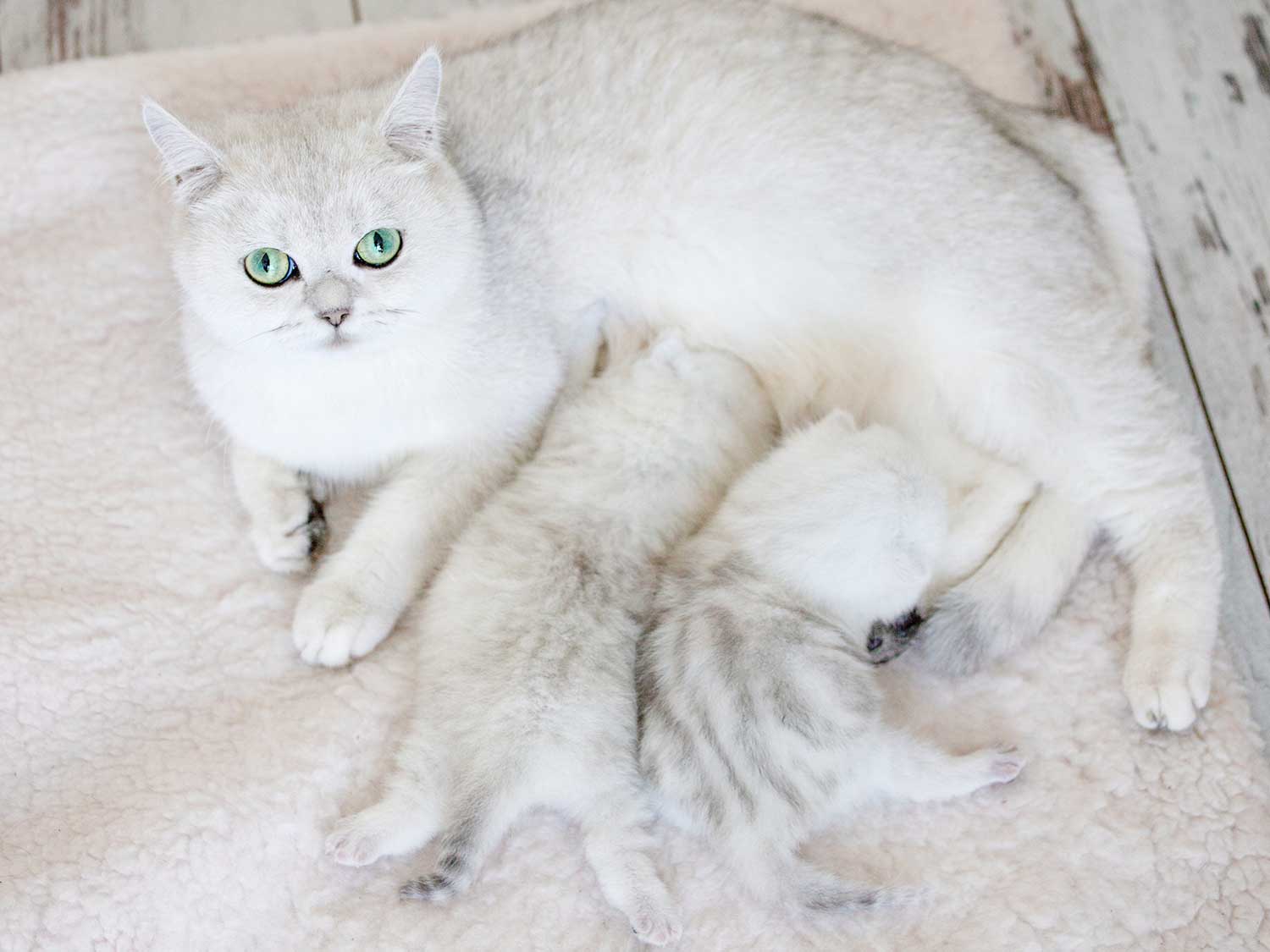
Why Y'all Should Buy Simply from an Upstanding Breeder
To put it simply – if y'all're not buying from a reputable, ethical breeder, yous are ownership from a backyard breeder or worse, a kitten mill. These breeders are less probable to understand the brood genetics and work towards creating healthy well-behaved cats.
Buying from an ethical breeder ensures you go a cat that'due south been bred not only for looks, but first and foremost for good health and temperament. When dealing with purebred animals, this is crucial.
Yous need to know that the breeder you're working with knows what they're doing, and tin truly deliver you with the cat of your dreams. Still not sure how to cull the right true cat breeder for you lot? Post your questions in our Cat Showing & Ethical Breeding Forum and let our members aid.
Creating New Cat Breeds
The Cat Fancy began at the end of the 19th century with very few established cat breeds. Even every bit late every bit the 1950s, there were no more than x cat breeds. Fast forwards to our age: Walk into a national cat show, and yous'll be seeing dozens of cat breeds with very distinct looks.
Some breeds - such as the Siamese, the Persian, and the Birman - have been effectually for over a century. Still many cat breeds are very new and rare.
How do new breeds come into being?
Currently, at that place are iv ways to create a brand new cat breed:
- Finding a rare natural brood
- Breeding a rare random genetic mutation
- Breeding for a desired new await
- Crossing 2 or more known breeds
Finding a rare naturally-established breed

The term "new" in the example of these breeds refers to their status in the registries. They may be "old breeds" in every other sense of the word. Breeders begin by importing cats of that brood into the The states and Europe to establish a breeding program.
They and then work to establish a breed standard and create a stable and good for you gene pool. In fact, this is how the Siamese and Farsi cats started. A very recent example is the Khao Manee.
Nurturing a rare random genetic mutation

Genetic mutations happen all the fourth dimension in nature. A mutation tin can create an unprecedented modify in a cat'due south physique or character and could serve as the basis for developing a new breed. The mutant cat becomes the first in the line of a new breed, every bit the breeder or breeders strive to retain the unique mutation while working towards establishing a wide-enough genetic pool.
The Scottish Fold is an example of this procedure, as are the American Wirehair and the Sphynx. Far rarer, the Donskoy is a adequately recent example.
Convenance for the Desired New Expect
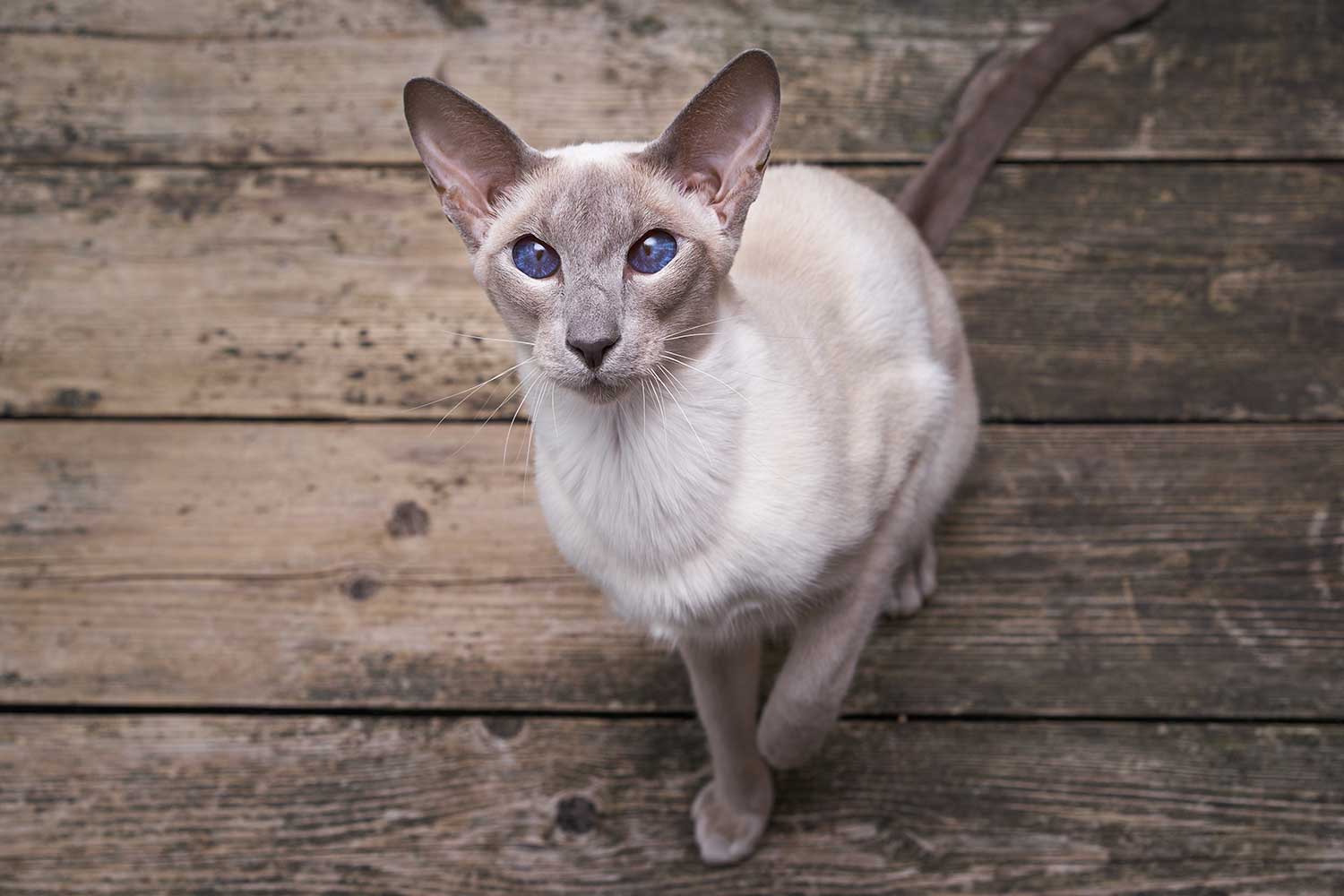
In this case, a breeder or a group of breeders decide on the desired expect and work toward creating it. They begin with a certain established breed, then select the cats with a specific expect, to amplify the effect in hereafter generations.
To some extent, this is done in every breeding program, only information technology can likewise be done to create near a new breed of cats. Comparing modern Siamese cats with the traditional "apple tree-caput" or traditional Siamese cats of the past shows but how dissimilar a look can be achieved this style.
Crossing known breeds
Here too, breeders get-go come up with the vision for a new breed, different from the ones which already be. They so work towards achieving this look by deliberately crossing specific breeds.
Crossings are usually allowed in the initial stages of the brood creation process. Afterwards on, they are gradually limited until in that location is a stable gene pool for the new brood.
Crossing breeds is much faster than convenance for specific characteristics within a breed, merely it can exist a risky business. Breeders can accidentally introduce negative genetic traits into the new cistron puddle created by "mixing up" existing breeds.
For case, nosotros know today that every such new breed which was created using Persian cats is at hazard for conveying the gene for PKD (Polycystic Kidney Disease).
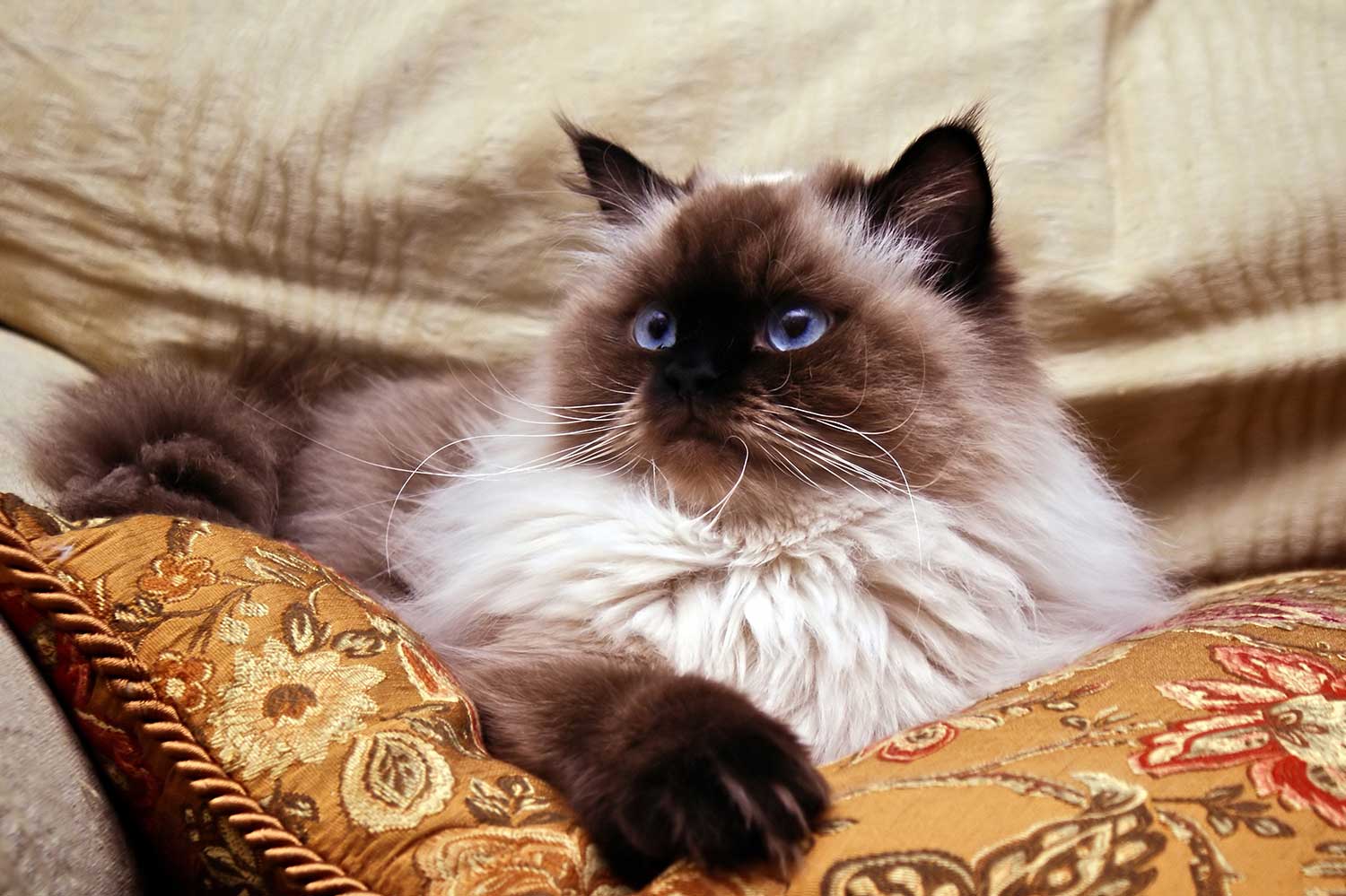
The pop Himalayan began as a cross between Siamese cats and Farsi cats, to achieve longhair color-pointed cats. Napoleons and Minskins serve as more recent examples.
Creating a New Cat Breed Ethically Is Non Easy
Creating a breed takes a lot more than raising parents of several breeds, letting them mate and selling the kittens. No matter which of the methods is used, creating a new breed ethically takes a lot of work. It is usually a group effort involving several catteries.
The breeders have a clear vision and programme, and they oftentimes work with geneticists in an attempt to accomplish a certain look. They actively breed towards information technology rather than arbitrarily mixing and matching cats.
Breeders must accept extra care to weed out wellness bug too, and crossing with other breeds is done with corking care. The aim is to create a large plenty genetic pool to avoid hereditary wellness problems, while at the same fourth dimension making progress towards an established brood look.
Of the larger cat registries, TICA has two special categories for these experimental cat breeds. These breeds brainstorm as "Preliminary New Breeds" and can, afterwards on, be promoted to the "Advanced New Breeds" category.
What the Futurity Holds: Designer Cats?
Genetic technology could very well be used in the future to create new breeds of cats. In theory, Mr. Light-green Genes, the glow-in-the-dark cat, could have been the first cat in a line of fluorescent kitties.
But like the first Ragdoll or Donskoy, he has a unique genetic variation that can be inherited by his offsprings. The difference is, Mr. Dark-green Genes' mutation was not random. It was deliberately created by scientists to test a technique of gene therapy successfully.
However, at this betoken, lab-generated breeds developed using genetic engineering belong to the realm of science fiction. Creating such a cat is an expensive and time-consuming process. "It takes a lot of work, back up for personnel and cats.
It is non an efficient process. Transgenics should just be used for a strong scientific reason such as fixing an inherited disease," Professor Lyons explained. Until that changes, breeders volition keep using more than traditional means to create new cat breeds.
Seven Rare Cat Breeds Yous May Not Know
Getting a new breed of cat to be counted amidst the "regular" title breeds tin can be a long process. Breeders work long and difficult to achieve a certain wait and found that as the standard for a new brood.
TICA - The International Cat Association - has special official categories for these new breeds, and they can exist shown while technically they are still being developed.
Here are vii new breeds recognized by TICA, which you may not accept heard of earlier.
Khao Manee
A native of Thailand, this is one of the naturally-occurring breeds which was showtime imported into the United states in 1999. Kaho Manees, sometimes referred to as Khaomanees (one word), are completely white cats. They are famous for beingness odd-eyed cats, but while this is indeed a preferred trait, even-eyed cats still run into the brood standard, and optics can be of any color.
A couple of dozen of these cats have been imported from Thailand into the US, where a group of breeders is working together towards creating a breed with moderate SE Asian blazon head and body. To that cease, crossing with Thai-born cats of other colors is allowed at this time.
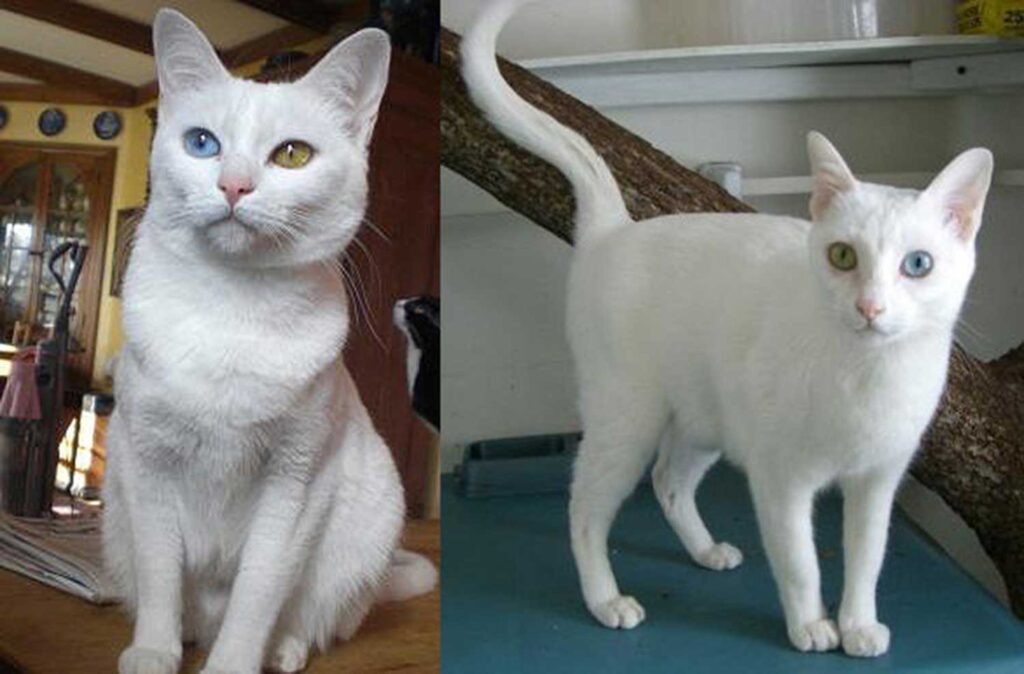
Photo past Odyssey Khao Manee - Welcome to Odyssey
Napoleon (and Napoleon Longhair)
Munchkins were the original dwarf cats, developed from a random mutation discovered in the 1980s. Deliberate mating of Munchkins with other breeds created several new dwarf breeds, one of them existence the Napoleon.
Napoleons were created by mating Munchkins with cats of the Persian breed grouping, which included Persians, Himalayans, and Exotic Short Hairs.
The result is a new breed with brusk legs (though some cats exercise non brandish this trait) and a characteristic round face with large round eyes, similar to that of a doll-faced Persian.
The Napoleon has a circular body, also, a lot like that of a Persian true cat, merely it commonly has the short legs of a Munchkin. Their coat may be long, but it is more manageable than the coat of a Western farsi.
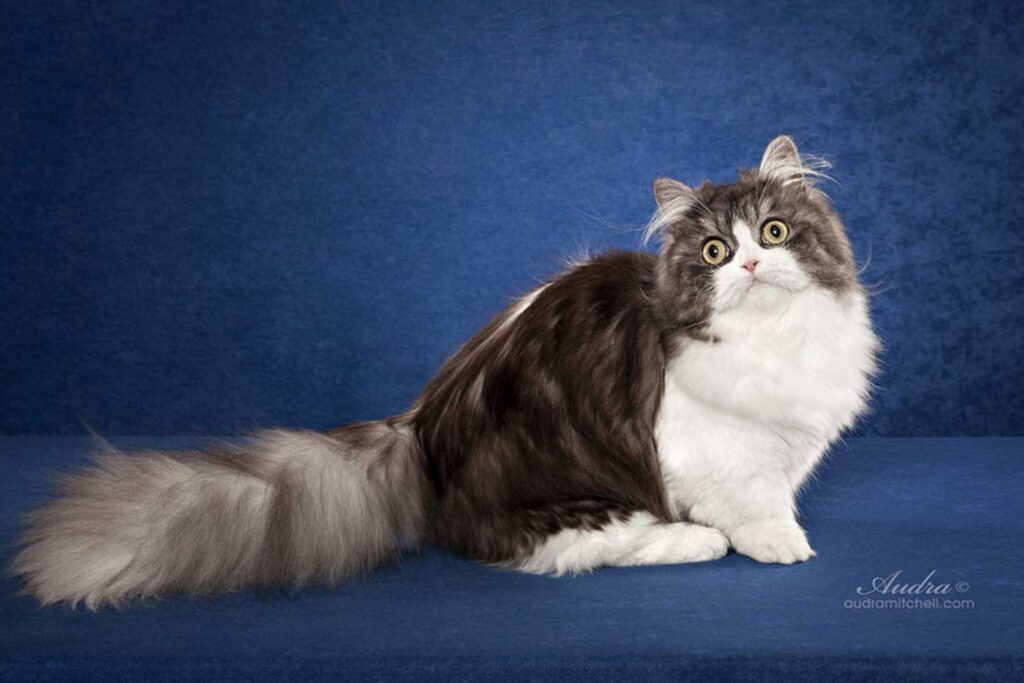
Picture by Bluish Skies Cats - Blue Skies Cattery Dwelling house
Donskoy
This breed was developed from a single rescued true cat in Russia, in a city called Rostov-on-Don (hence the name). The true cat was at first thought to suffer from a rare peel disorder, but eventually, this was found to be a new mutation for hairlessness.
This mutation is unrelated to the amend-known Canadian Sphynx, although the breed is sometimes chosen Don Sphynx. Donskoys don't have to be entirely baldheaded. They sometimes sport very short coats of various textures, which may only be present during the cat's early on years of life. These cats are strong and muscular, with large ears and almond-shaped optics.
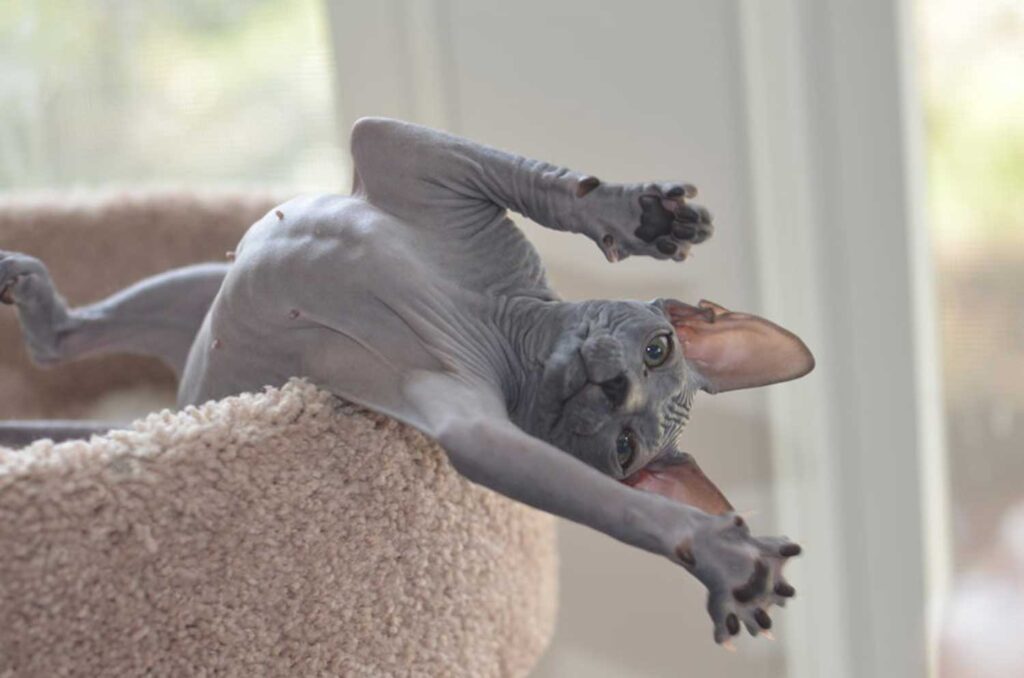
Picture past KathrynEden, DonEden Cattery - Home
Minskin
The Minskin is the result of a deliberate breeding program adult around the turn of the century to meet the vision of one breeder, Paul McSorley.
McSorely sought to create a short-legged cat with a unique coat pattern where hair would grow only on the torso'south extremities. After several generations, he finally met his challenge, and the Minskin was created.
Munchkin and Sphynx cats were used in the program, but as well Devon Rex and Burmese cats. The stop consequence is a dwarf cat with a short velvety coat on the head, legs, and tail and a relatively bald body.
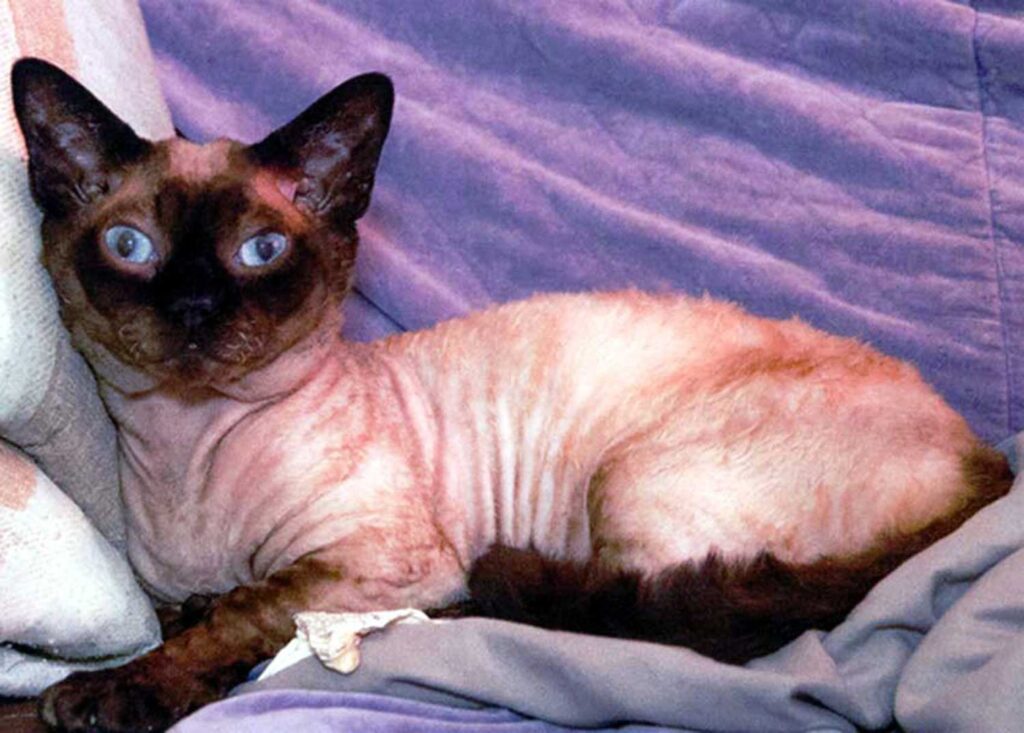
Pic by sweetness as processed - Sweetness Minskin cats and kittens
The Highlander
Highlander cats are big and friendly. They have a very distinct look, with ears that are firm, yet softly curl at the tip and brusque tails.
This unique look is the effect of the deliberate breeding of two hybrid breeds back in the 1990s: the Desert lynx And the Jungle Curl. The resulting cats were at starting time known as the Highland Lynx, but the name was later changed to the Highlander.
The breed standard also calls for an average to large body and an overall athletic trunk build. Highlander cats tin be tabbies or colorpoint, but they cannot be bi-colors.
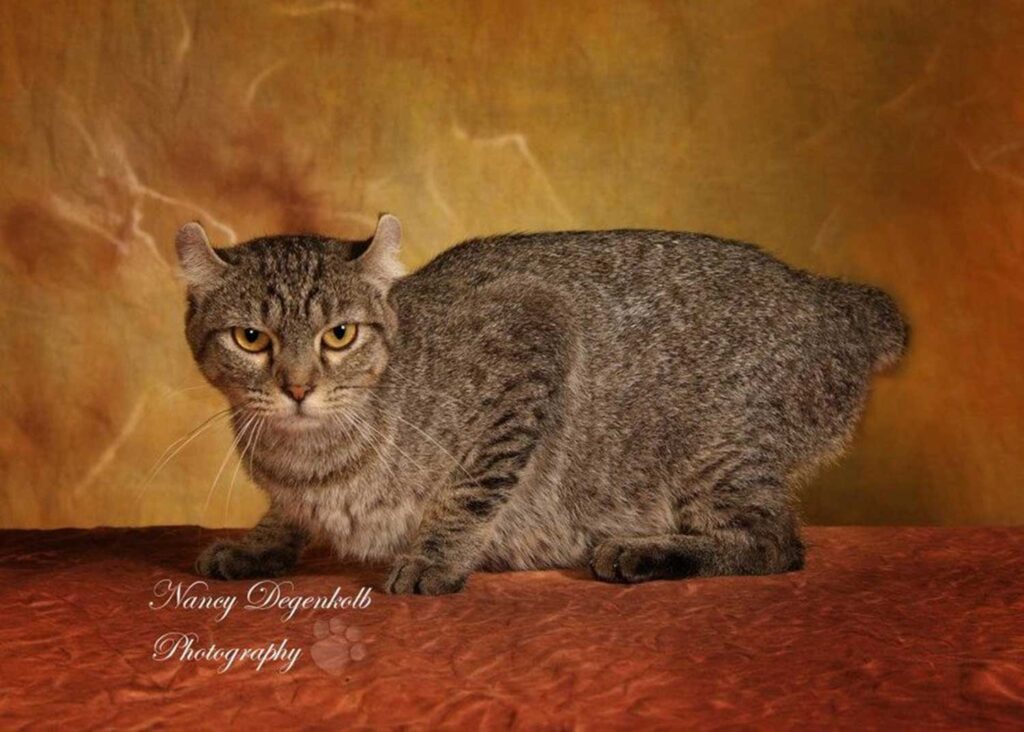
Picture by The The Wild in Center Cattery and The Domicile of the Highlander - wildathearthighlanders.com.
The Serengeti
With a clearly exotic "wild" look, y'all might think the Serengeti was a hybrid cat (in hybrids, wild cats are used to innovate unique traits to the domestic true cat genetic pool).
Withal, this royal feline is entirely domestic. It's the outcome of deliberately crossing Bengal cats with Oriental shorthairs, initiated by the founder of the breed: Karen Sausman of Kingsmark Cattery in California.
The result is an elongated cat with large ears and large round eyes. The coat has a distinctly spotted tabby blueprint. The glaze can be black or even silver, just if any pattern comes through, it should show spots.
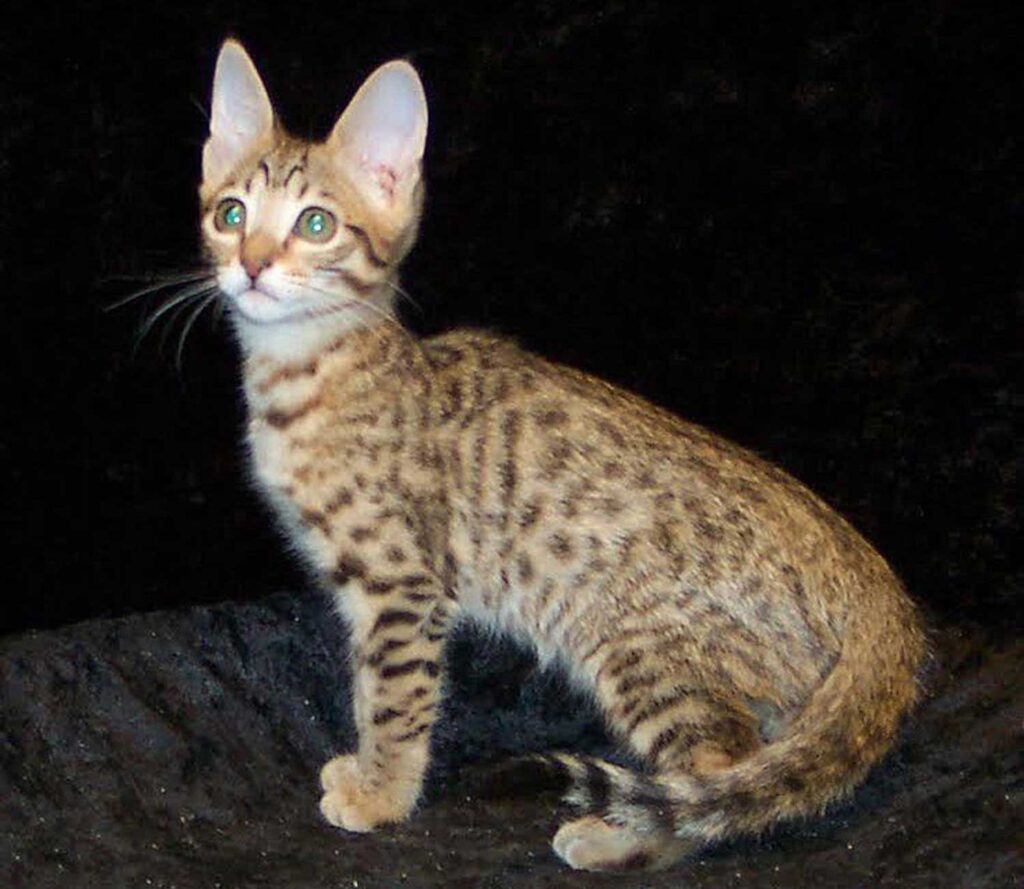
Moving picture by Kingsmark Cattery - Bengal Cats & Kittens Andalusian Horses & Horse Breeders in California
The Sokoke
Relatively new to the Cat Fancy world, this is, in fact, an "old brood", naturally occurring in a specific area in Kenya, Africa. The founding cats of the Sokoke breed were imported from Africa into Europe in the 1980s and 1990s, with a second, separate moving ridge of imports bringing "new blood" into the lines in the start decade of the 21st century.
Recent genetic studies have shown the Sokoke to exist related to the Asian Cats group, which could assist explain its lithe elegant silhouette. These cats are strong and muscular, with a dense brown tabby pattern.
Sokokes are friendly and social cats, yet contained. Being a natural brood, they have no known hereditary diseases. They shed very picayune since they hardly take whatsoever undercoat.
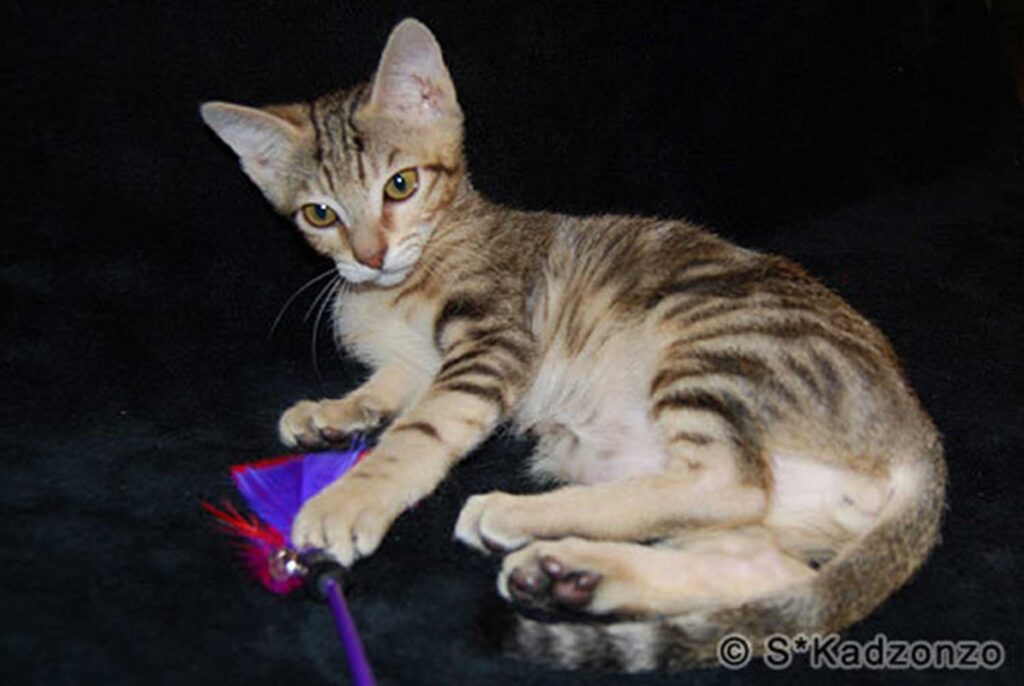
Picture by Kadzonzo Cattery - SOKOKE, Sokokekatter, SOKOKE katt, kattras
"I own a purebred cat - should I brood her and sell the kittens?"
Cats are cute, and kittens are cuter, so why not permit Kitty have a litter? The cuteness factor volition guarantee they all discover homes, correct? Since Kitty came with papers that say she'due south purebred, and then people will exist willing to pay for her kittens, so there volition be a trivial profit involved as well. Win/win, correct?
Non so much. The first thing to consider is this: Is your true cat pedigreed? If Kitty came from a shelter or a friend's litter, the reply is almost certainly no. The only litters that are considered pedigreed come up from a reputable breeder who will requite you papers, aka the true cat's family tree.
Papers verify that this cat'south ancestors were tested for diseases the brood is prone to and met the brood standard for height, weight, temperament, and coloring. They were shown at sanctioned cat shows and judged past experts in the breed.
There are associations that will requite purebred status to a kickoff breeder - for the right amount of cash. These are the equivalent of a mail service-order matrimony license. They will not be recognized by the Cat Fancier's Association. Don't let a cute face up lure you into a scam.
But even if your true cat has the right kind of papers, don't rush into breeding. The path towards condign a responsible ethical breeder is long and needs to be followed carefully and slowly.
How to become an ethical cat breeder
You should begin by research. A lot of inquiry. Visit cat shows and learn all you lot can most the breed that you're interested in. Practise that long before you even purchase your first cat of that breed.
If you bought your cat first, and but so roughshod in love with the thought of breeding, your current cat may or may not be a skilful candidate for breeding. Outset, check your contract. If Kitty did come from a reputable breeder, did you have a contract with the breeder that says she can be bred and shown? Or does the contract state that she must be spayed?
Y'all are contractually obligated to follow through on the understanding. If there was no contract, then in all likelihood, you've been dealing with a backyard breeder. That means that the true cat is probably not a good candidate for a breeding program.
Even if you already own a cat that can be mated - practise you take a mentor who will walk you through the process? Kitty's breeder may be willing to assistance - or peradventure too busy, simply able to suggest someone.
Finding a good mentor is the virtually important step in your journey to becoming a cat breeder. That mentor can guide you through all the hurdles, including finding the correct mate for your cat and caring for the pregnant mother and kittens.
The Challenges of Breeding Cats
Here are some of the issues that you're likely to face if you're going to become a serious upstanding breeder.
One time y'all've establish a stud cat, claret tests volition be performed to rule out any disease for both the male and female cats. Since Mr. Cat could be an out-of-towner, travel expenses have to exist considered. Will Kitty go to him, or will he travel to encounter her? Volition the traveling true cat make the trip alone, or will the human brand the trip also?
If the mating takes and Kitty is pregnant (information technology doesn't e'er happen on the first try), then the vet visits starting time to make sure Kitty is gaining weight and staying good for you. You'll need a due appointment so you can have off work to be there for the birth.
Although most people think cats just naturally know what to do, first-fourth dimension moms can be very nervous—bloodshed rates go up and then.
One time the kittens are born, they'll need vet visits likewise. Kittens should stay with Kitty until they are about twelve weeks old, and so that means a lot of kitten food, milk supplements, bottle feedings and lots and lots of cat litter.
Of class, you lot'll take been networking from the starting time about the litter and so that when they are born, they are all spoken for—with deposits—and if the estimate of kittens vs. the number of people who want to purchase differs, you'll have to deal with that likewise. Don't forget lawyer fees for drawing up your own contract.
A litter of kittens is not as piece of cake as it sounds. Just the research into the lineage and the search to notice a breeder who has a cat to sell you, and then the search for a mate for her, can be overwhelming.
Veterinary costs and food bills consume up potential profit. The cat litter pecker plus the constant need to clean, scoop and refill volition be plenty to make you weep.
A true cat should be a twelvemonth old before she's bred. She may become through i or more than cycles before then—and she'll be vocal and loud about her frustration during those times. Spraying (urine where y'all do not want information technology) is another way to bear witness her unhappiness.
Later all the work you've put into a litter, volition you be able to allow the kittens get? It's a hard thing to face.
Nonetheless unsure?
Unless you are knowledgeable about the breed, experienced enough to know all of the in a higher place, know people in the breed, have shown cats, and have the time and coin to practise all the work involved, the answer is: Don't breed. The bottom line is, although the kittens would exist among the cutest in the world, for every kitten from your litter who finds a home, there'southward a shelter cat who doesn't.
How Much Does It Toll To Breed Cats?
Costs will vary depending on where y'all live, and your relationship with the veterinarian—some offer a discount to regular clients, those with multiple animals or breeders. Be sure to enquire in advance—before you even become a cat to brood. The costs involved can be shocking.
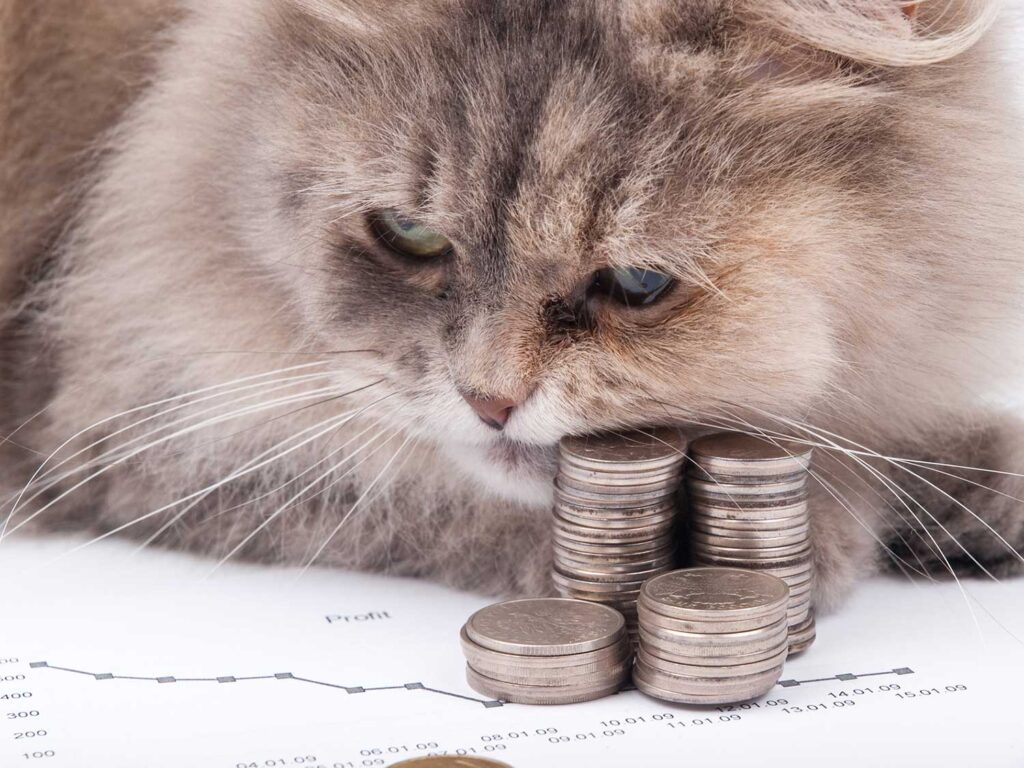
Stud fees and legal fees
You'll want to find a breed quality cat that tin cost from hundreds to thousands of dollars. Stud fees vary from the kickoff option of a kitten to a flat fee that may be as high as the sale price of 1 kitten. Add in travel costs since the mate could be an out-of-town cat - will you travel with your true cat? Remember, non all pregnancies happen on the kickoff endeavour.
Inquire your mentor for a reference to a lawyer - you'll sign a contract when you buy your cat and will need a like contract for your clients also. You should as well have a contract in identify to cover the agreement betwixt the owner of the cat of the other sexual practice. Lawyers don't come cheap.
Care During Pregnancy
If you own a breeding queen true cat, at that place will exist extended veterinary costs for her pregnancy and birth. In one case the cat is pregnant, she'll need an ultrasound, which can range from a moderate fee to hundreds of dollars. This will help determine how many kittens she'll take.
The number of cats is important because you'll desire to pre-sell the kittens—and have fourth dimension to investigate the prospective owners to make certain it will be a good domicile.
Volition Kitty be eating for four? Six? So food intake will increment. She'll accept smaller meals, more oft, as the pregnancy advances. This means more than frequent visits to the litter box for her and more than cleanup for yous. Some cats may need nutritional supplements.
The pregnant true cat will also need regular checkups at the vet'southward office to brand sure things are going according to plan.
The birth tin can be expensive besides
When it'due south time for the kittens to be born, plan to have off work. Cats tin can have kittens without supervision, but in case of emergency, yous'll want to be at that place. Without supervision, the mortality rate goes up.
Although feline due dates might be more predictable than human due dates, plan on at least three days of following the cat around the house - and and then in a moment of inattention, finding she'south nested on your all-time sweater, right next to your good shoes.
Once the kittens are born, they'll need to see the vet likewise, so be certain to have enough cat carriers to transport Kitty and the brood to the vet's office. The vet may charge a blanket fee for the whole litter or charge per kitten. Kitty and the babies will need to be wormed, twice at least. Kittens will need ii serial of vaccinations, after viii weeks of age.
If you decide to show your cat as well, as many breeders do, there will exist additional costs associated with traveling and participating in cat shows.
To sum up -
- Buy Kitty—hundreds to thousands of dollars for proficient quality, improve-the-breed, champion cat with a practiced pedigree whose lineage has shown no obvious illness the breed may be prone to.
- Observe a stud cat with an equal pedigree—stud fee can equal the price charged for a kitten.
- Claret piece of work to ensure both cats are good for you. This can range from $l and up.
- Travel to/from the stud true cat and loss of wages for days off.
- Vet visit to confirm pregnancy (which may not happen on the showtime try). Office visit plus exam. If the vet feels Kitty is pregnant, an ultrasound is in order to count the fetal heartbeats.
- Supplements if needed,
- Actress food and litter, every bit Kitty needs to nourish the kittens.
- Advertising costs, so buyers are in place before the kittens are born.
- Legal fees—to write a contract for buyers. Since y'all'll want the best habitation possible for your cats, the contract will include a paragraph that states if for any reason, the buyer must requite upwardly the cat, you will take her back. No questions asked. The contract should also address if the cat sold is pet quality or show quality. If show quality, will the buyer be obligated to bear witness and breed also?
- Time off work when the kittens are due.
- Vet visits, food, and litter for the kittens for iv months. They should stay with their mother until twelve weeks old. You will also have to socialize the kittens to make sure they are outgoing and unafraid.
Breeding is not for the faint of heart. Emergencies happen, costs are high, and profit is a myth. Only brood if y'all truly know and beloved the breed, nourish cat shows, know breeders, have the time, money, and patience—and higher up all, the want to improve the brood. If y'all want Kitty to accept litter for whatever other reason, yous're but adding to the pet overpopulation problem.
Yet in love with the idea of breeding cats ethically? Check out our True cat Showing & Ethical Breeding Forum where yous can mail service your questions and get help from experienced breeders. Simply keep in heed that we have a strict policy against backyard breeding, so if you're breeding non-registered cats unethically, that forum is not the place for y'all.

How Do I Get Papers On Cats That's Never Been Registered,
Source: https://thecatsite.com/c/breeding-cats/
Posted by: fikebutial.blogspot.com
0 Response to "How Do I Get Papers On Cats That's Never Been Registered"
Post a Comment